
Life Balance
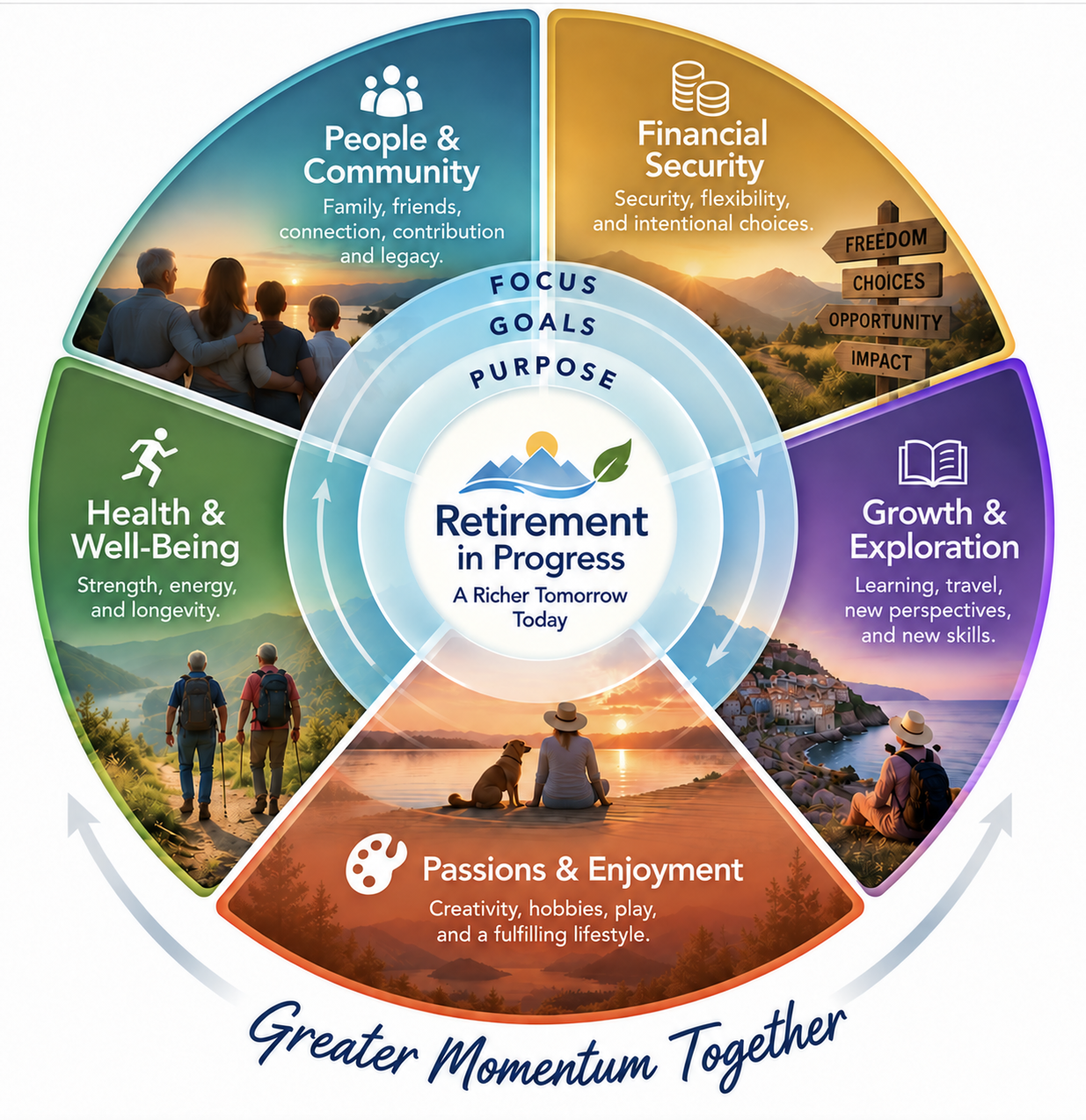
A fulfilling retirement is personal. These five connected areas help you explore what matters; they do not need equal time or equal scores.
The whole picture
Five areas that support a fulfilling retirement
Consider all five, then choose where you want to focus. Balance is personal; it doesn’t mean giving every area equal time.
People and Community
Family, friends, connection, contribution, and legacy.
Explore People and Community →
Why this area matters
Retirement can change the relationships and routines that once came automatically through work, parenting, or a familiar community. This area asks whether you have the kinds of connection that feel meaningful to you. That could include close family relationships, dependable friendships, neighbors, faith communities, volunteer work, mentoring, caregiving, or simply having people with whom you can share ordinary life.
The goal is not to accumulate the largest possible social circle. Some people thrive with a few deep relationships, while others value frequent group activity. What matters is whether your current pattern provides belonging, support, contribution, and the opportunity to give as well as receive. Your desired balance may also change after a move, loss, health event, or new family responsibility.
The National Institute on Aging explains the difference between loneliness and social isolation, describes health risks associated with both, and offers practical ways to remain connected. Its suggestions include shared activities, volunteering, classes, communication technology, faith communities, and local organizations. The source supports the importance of meaningful connection; it does not prescribe one ideal social life.
Financial Security
Security, flexibility, and intentional choices.
Why this area matters
Financial security in retirement is broader than the size of an investment account. It includes confidence that regular obligations can be met, unexpected costs can be absorbed, and resources can support the choices that matter to you. Those choices might involve housing, health care, travel, family assistance, generosity, hobbies, or preserving flexibility for later years.
This area is intentionally personal. Two households with similar assets may experience very different levels of security because their expenses, income sources, responsibilities, risk tolerance, and priorities differ. A useful reflection considers both the numbers and the sense of control they provide. A low rating may identify a need for information, planning, or professional advice; it is not a judgment about success.
The Consumer Financial Protection Bureau provides a ten-question financial well-being tool focused on the ability to handle unexpected expenses, enjoy life within available resources, feel secure about the future, and retain control over money. It does not request account balances or other personal financial data. The resource can help visitors see why financial well-being involves resilience and choice as well as income and wealth.
Health and Well Being
Physical, cognitive, and emotional capacity for daily life.
Explore Health and Well Being →
Why this area matters
Health and well-being influence what a person is able to do, how independently daily life can be managed, and how much energy is available for relationships, exploration, and enjoyment. This area includes physical movement and strength, cognitive health, emotional resilience, sleep, nutrition, preventive care, and the management of existing conditions.
A strong rating does not require perfect health. Many people live fulfilling and active lives while managing chronic conditions, disability, or age-related change. The useful question is whether your health, habits, care, and environment currently support the activities and roles you value. Improvement might mean training for an event, but it could just as meaningfully involve safer movement, better rest, an overdue appointment, or adapting an activity so it remains accessible.
The World Health Organization defines healthy aging in terms of functional ability: having the capabilities and supportive environment needed to be and do what a person values. Its explanation includes mobility, learning, decision-making, relationships, basic needs, and contribution to society. It also emphasizes that there is no typical older person and that being free of disease is not a requirement for healthy aging.
Growth and Exploration
Learning, discovery, challenge, and new perspectives.
Explore Growth and Exploration →
Why this area matters
Retirement may provide time to revisit postponed interests and pursue experiences that were difficult to fit around work. Growth and Exploration includes formal learning, travel, reading, language study, new technology, unfamiliar places, challenging physical experiences, creative experimentation, and the willingness to remain curious.
Growth does not have to mean constant novelty or ambitious travel. It can be learning to use a new tool, taking a local class, visiting a nearby museum, trying a different trail, or asking someone to explain a perspective you do not yet understand. The relevant question is whether life continues to offer enough discovery and challenge to feel engaging. The right amount will vary with health, finances, responsibilities, and personality.
The National Institute on Aging’s material on enjoyable and meaningful activities provides examples that cross learning, movement, creativity, volunteering, and social connection. It discusses how mentally stimulating, physical, creative, and social activities may support well-being and resilience. The examples are useful starting points rather than a required checklist, and the source encourages beginning with a manageable number of activities.
Passions and Enjoyment
Creativity, hobbies, play, and a fulfilling everyday life.
Explore Passions and Enjoyment →
Why this area matters
Passions and Enjoyment focuses on activities pursued because they are satisfying, absorbing, restorative, or fun. Retirement can create more discretionary time, but that time does not automatically become fulfilling. Hobbies, creative work, recreation, entertainment, nature, collecting, making, music, sports, and simple personal rituals can help give everyday life texture and anticipation.
This area is deliberately distinct from achievement. An activity does not have to produce income, demonstrate expertise, or serve someone else to be worthwhile. At the same time, a passion can naturally create connections with community, health, growth, or even supplemental income. The profile asks whether enjoyment has an appropriate place in your current life—not whether your interests are impressive or productive.
The National Institute on Aging describes meaningful and enjoyable activities as part of an active lifestyle that can involve the mind, body, and spirit. Its examples include art, hiking, volunteering, games, music, learning, family activities, and community participation. The resource also cautions that the right balance differs by person and suggests starting with one or two activities so enjoyment does not become another source of stress.
One activity can support several areas
A walking group can support health, connection and enjoyment. Learning photography can bring growth and a new passion. Volunteering can offer purpose, relationships and learning. Choose the most useful home for a goal; you do not need duplicate actions for every area it touches.